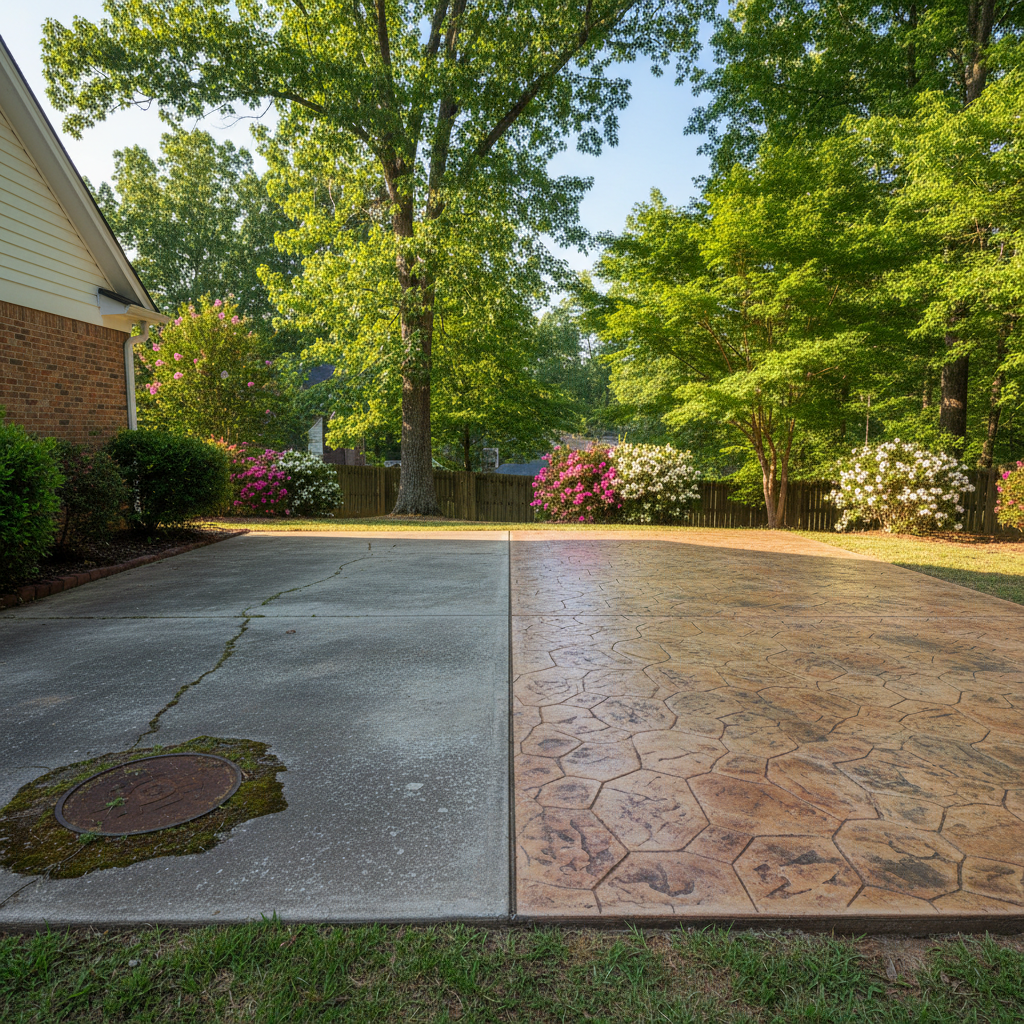
Thinking about jazzing up your outdoor space? Maybe a new patio, a walkway, or even a driveway. You want something that looks good, lasts ages, and doesn't empty your bank account. Smart thinking, that. When we talk decorative concrete, two choices usually pop up: stamped concrete and exposed aggregate. Both can turn a plain slab into something pretty special, but honestly, they're quite different once you dig in. Let's chat about what I've seen working with both right here in Durham.
So, What's the Deal with Stamped Concrete?
Stamped concrete, well, it's all about looking like other stuff. Picture flagstone, brick, wood planks, even natural rock. We pour the concrete, let it firm up just a little, and then press big, flexible mats with patterns right into the surface before it fully hardens. After that, we usually add color – sometimes a base color mixed right into the concrete itself, and then a release agent that also adds a secondary color. This creates depth, you know, a more natural look. It's really quite impressive what we can pull off with it.
And Exposed Aggregate?
Exposed aggregate is a whole different animal. Instead of stamping a pattern, we're actually showing off the small, decorative stones (the aggregate) that are already mixed into the concrete. We pour the concrete, let it set up a bit, and then either wash away the top layer of cement paste or use a special retarder that stops the very top from hardening. Then we wash it off to reveal those beautiful, natural stones. You get a textured, natural look; it's usually a bit more subtle than stamped concrete but still very striking. It's got a nice feel to it.
Cost: What's Your Wallet Saying?
Let's be real, this is usually the first thing people ask. Generally, exposed aggregate tends to be a bit easier on the budget than stamped concrete. Why's that? Stamping simply takes more labor. You've got the cost of those specialized stamps, the extra steps for coloring and texturing, and it just demands more time and skill to get it perfect. With exposed aggregate, while it still needs expertise, the process is usually a little simpler once the concrete is poured. You might be looking at 10-20% less for exposed aggregate, depending on how complex the job is and what materials we use.
Durability: Built to Last in NC
Both are tough, don't get me wrong. They're concrete, after all. But there are some differences. Stamped concrete, because it has a textured, patterned surface, really leans on its sealer to protect those intricate details. If that sealer wears down, the colors can fade, and the pattern can start to look, well, tired. You'll need to reseal it every 2-3 years, especially in high-traffic areas or spots that get a lot of sun, which we certainly get here in Durham. Our hot, humid summers and occasional freezes can be pretty hard on sealers.
Exposed aggregate, on the other hand, is incredibly durable. You're exposing the actual stone, which is naturally hard-wearing. It doesn't rely as heavily on a surface sealer for its integrity, though a sealer will definitely make it look better and easier to clean. It's less likely to show wear and tear, and it handles our clay-rich Durham soil and shifting temperatures really well. Plus, it's naturally slip-resistant because of that bumpy texture — a big bonus for pool decks or walkways.
Maintenance: Keeping It Looking Good
This really ties into durability, doesn't it? Stamped concrete needs regular cleaning and resealing. If you skip the resealing, it'll definitely show. You might see some efflorescence (that white powdery stuff) or the colors just won't pop like they used to. Exposed aggregate is lower maintenance. A good power washing once a year usually does the trick to keep it looking fresh. You can seal it to protect it further and bring out the colors of the stones, but it's not as critical for its structural integrity or pattern preservation as it is for stamped concrete. That's a nice perk.
Appearance: What's Your Style?
This is where personal taste really comes into play. Stamped concrete offers incredible versatility. You can literally make it look like almost anything. If you want a patio that looks like natural stone without all the cost and hassle of actual stone, stamped concrete is your best bet. It can be incredibly realistic and elegant.
Exposed aggregate has a more natural, organic feel. It's less about pretending to be something else and more about celebrating the natural beauty of the stone within the concrete itself. It can look very modern, rustic, or even classic depending on the concrete's color and the aggregate chosen. It’s got a clean, honest look to it. Some folks find the texture a bit rough for bare feet on a patio, but for driveways, sidewalks, or around a pool, it's fantastic.
My Recommendation for Durham Homeowners
Look, both are great options, and Bull City Concrete can do both beautifully. But if you're asking me for a general recommendation for most Durham homes, especially given our climate and the need for long-term durability with minimal fuss, I'd lean towards exposed aggregate.
Here's why: It's a bit more forgiving with our weather cycles, it's incredibly durable, and it's lower maintenance over the long haul. That natural, textured surface holds up well against foot traffic, kids, pets, and even the occasional freeze-thaw cycle we get. Plus, that inherent slip resistance is a real bonus for safety. While stamped concrete can be stunning, it just demands a bit more attention to keep it looking its best. If you're someone who wants a beautiful, long-lasting surface and doesn't want to worry about resealing every couple of years, exposed aggregate is often the smarter, more practical choice for a lot of folks around here.
Ultimately, it comes down to your budget, the look you're going for, and how much maintenance you're willing to do. But for a solid, attractive, and low-stress option that stands up to everything Durham can throw at it, exposed aggregate is a real winner in my book.