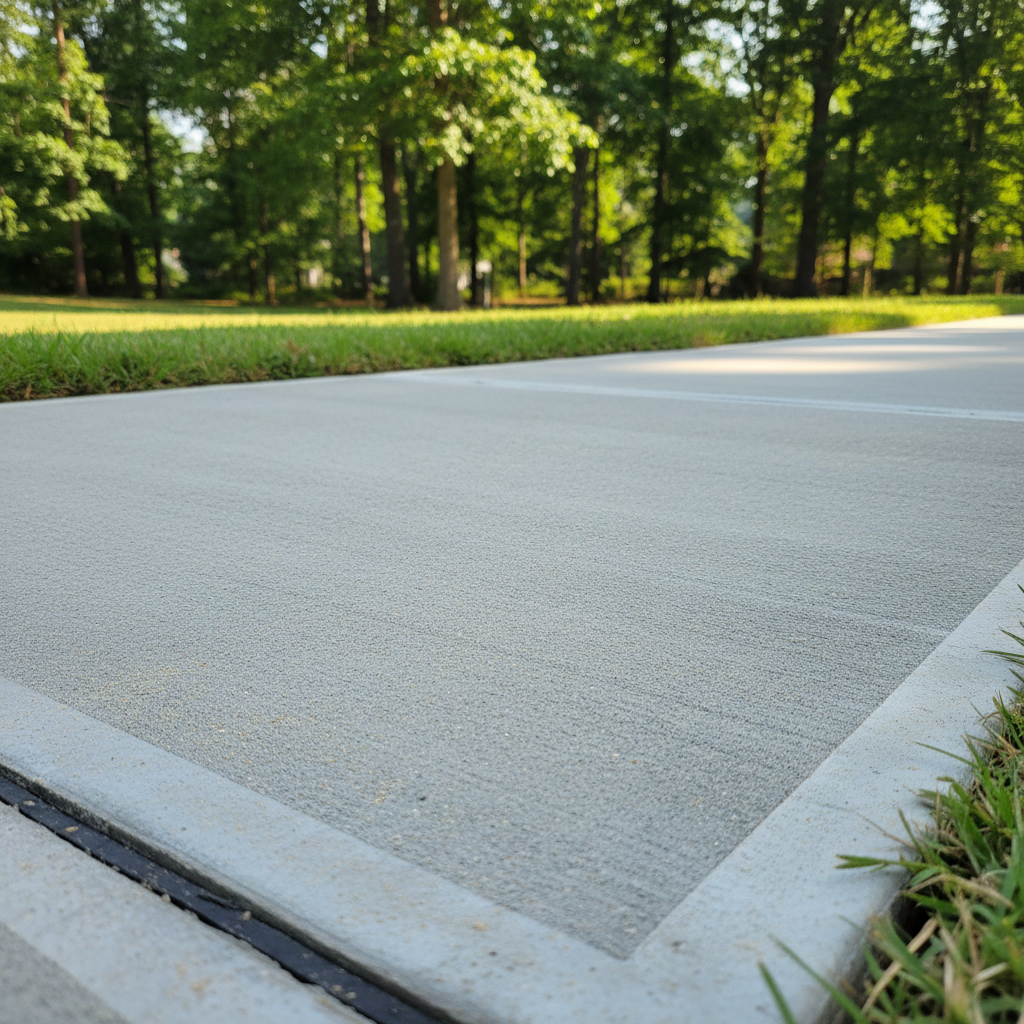
Alright, let's talk sidewalks. I get a lot of calls about concrete sidewalks here in Durham, and folks always have pretty similar questions. It's not just about pouring concrete; there's a lot that goes into making sure your paths are safe, durable, and actually last. So, I figured I'd tackle some of the most common things I hear. No fluff, just what I've seen working on properties all over town, from Old West Durham to Hope Valley.
What causes cracks in my concrete sidewalk?
This is probably the number one question I get. Cracks happen for a few main reasons. First, you've got ground movement. Our red clay soil here in Durham expands when it's wet and shrinks when it's dry. That constant shifting underneath puts stress on the concrete, and eventually, it'll crack. Tree roots are another huge culprit; they're strong enough to lift and crack whole sections. Then there's improper installation – if the base wasn't prepared right, or the concrete mix wasn't good, or it wasn't cured properly, you're going to see cracks sooner rather than later. Finally, heavy loads, like a delivery truck pulling onto your driveway that extends over a sidewalk section, can cause damage.
Can I just patch a crack, or do I need to replace the whole section?
It depends on the crack. For hairline cracks, especially if they're not spreading or causing a tripping hazard, you can often get away with a good quality concrete caulk or filler. This is more about aesthetics and preventing water from getting underneath and making things worse. But if you've got wide cracks, multiple cracks in a small area, or sections that are uneven and creating a trip hazard, patching isn't going to cut it. You're just putting a band-aid on a bigger problem. For safety and longevity, replacing that section is usually the smarter move. We've seen too many homeowners try to patch extensively only to call us a year later to replace it all anyway.
How long does a concrete sidewalk typically last in Durham?
A well-installed concrete sidewalk, done right by a company like Bull City Concrete, should last you 20 to 30 years, sometimes even longer. But that's if it's installed correctly and you're doing a little bit of maintenance. Things like our freeze-thaw cycles in winter, aggressive tree roots, or constant heavy traffic can shorten that lifespan. If you're seeing significant spalling (flaking surface), widespread cracking, or major unevenness in less than 15 years, it often points back to an issue with the initial installation or some serious external factors.
What's involved in replacing an old sidewalk section?
It's more than just pouring new concrete. First, we've got to break up and remove the old concrete. That's usually done with a jackhammer or a concrete saw, depending on the size. Then, we prepare the sub-base. This is critical. We'll excavate, grade the area, and compact the soil to ensure a stable foundation. Sometimes we'll add a layer of gravel for drainage and stability, especially if the soil is particularly soft or prone to moisture. After that, we set up forms, pour the new concrete, finish it, and then it needs to cure properly. Curing is super important – it's not just about letting it dry; it's about letting it gain strength. We'll often recommend keeping traffic off it for at least 3-7 days, sometimes longer for full strength.
Are there different types of concrete finishes for sidewalks?
Yep, definitely. The most common and cost-effective is a broom finish. That's where we drag a broom across the surface to give it a slightly textured, non-slip surface. It's practical and durable. You can also do a smooth trowel finish, but that's usually reserved for interior floors or very specific applications because it can be slippery when wet. Exposed aggregate is another option; it's decorative, where we wash away the top layer of cement to expose the stones underneath. It looks great but costs more. Stamped concrete is also an option for sidewalks, mimicking brick or stone, but it's a premium finish and usually more common for patios or decorative pathways.
How much does a new concrete sidewalk cost?
This is always tricky to give a solid number without seeing the job. It varies a lot based on several factors. The main ones are the size of the sidewalk (linear feet and width), the thickness of the concrete needed, the accessibility of the area for our equipment, and how much old concrete needs to be removed. Site preparation, like dealing with tree roots or poor drainage, also adds to the cost. Generally, you're looking at a per-square-foot cost, but that can fluctuate quite a bit. It's always best to get an on-site estimate so we can give you an accurate price for your specific project.
Look, your sidewalks are more than just a path; they're part of your property's curb appeal and, more importantly, a safety feature. Don't ignore those cracks or uneven sections. It's better to address them sooner rather than later to prevent bigger headaches down the road.