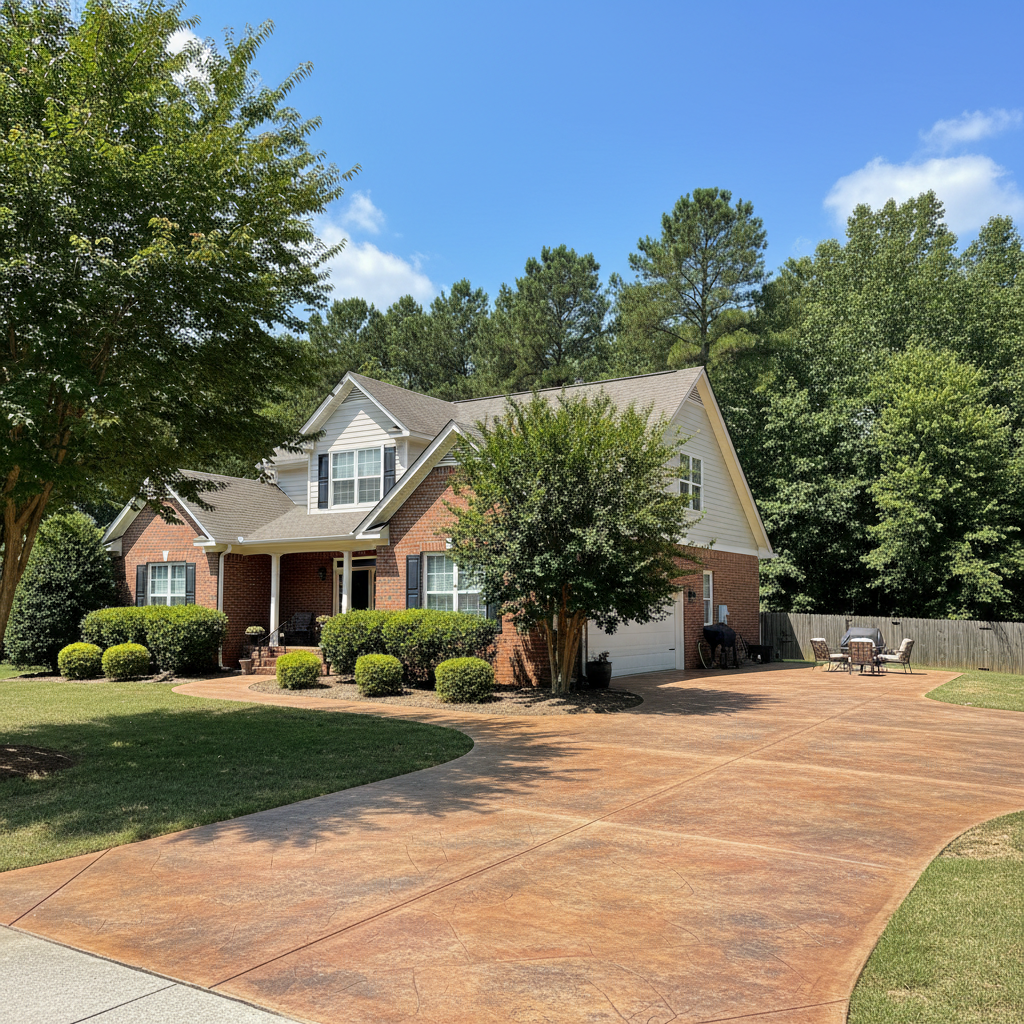
You're probably thinking about concrete staining because you've seen it around, maybe at one of those cool spots downtown or a neighbor's patio, and you like the look. It's a fantastic way to transform plain, gray concrete into something with real character. But here in Durham, it's not just about slapping on some color and calling it a day. There's a bit more to it, especially if you want that beautiful finish to hold up to our local weather and soil.
Why Staining Works Wonders (and Where It Shines)
Concrete staining isn't paint. That's the first thing you gotta understand. Paint sits on top of the concrete, and eventually, it'll chip, peel, or wear away, especially with our hot, humid summers and the occasional freeze-thaw cycles we get. Stains, on the other hand, penetrate the concrete surface. Acid-based stains react chemically with the lime in the concrete, creating translucent, variegated colors that look rich and natural, like stone or marble. Water-based stains are more like a dye; they also penetrate but offer a wider range of colors and a more consistent, opaque finish.
We see folks around Durham using staining for all sorts of projects. Patios are a big one, obviously. Instead of a boring gray slab, you get something that complements your landscaping or the brick on your house. Driveways, too, especially if you've got one of those long, winding ones in a neighborhood like Forest Hills or Duke Forest. It just elevates the whole curb appeal. Inside, basements and garages are popular spots. If you're turning a basement into a living space, a stained concrete floor is durable, easy to clean, and looks sharp. Commercial spaces love it too – think about the floors in some of the breweries or boutiques in the Golden Belt area; many of those are stained concrete.
Local Conditions Matter: It's Not Just About Pretty Colors
Here's where local expertise really comes into play. Our soil here in Durham, particularly the red clay, can sometimes influence how concrete cures and, consequently, how it takes a stain. Not directly, mind you, but the moisture content and the way concrete is poured and finished in our climate can affect its porosity. If the concrete isn't properly prepared or if you're dealing with an older slab that's seen a lot of wear, the stain might not penetrate evenly. You could end up with blotchy spots, and nobody wants that.
Then there's our weather. Those humid summers? They can affect drying times and how the stain reacts. And while we don't get brutal winters every year, those occasional deep freezes and thaws can be tough on any outdoor surface. That's why proper sealing after staining is absolutely critical. A good quality sealer protects the stain from UV rays, moisture, and abrasion, making sure it lasts for years. If you skip on the sealer or use the wrong kind for our climate, you're just throwing money away.
Choosing the Right Stain and the Right Pro
Picking a color is fun, but it's not the only decision. You need to think about the type of stain (acid vs. water-based), the condition of your existing concrete, and what kind of traffic the surface will see. A patio that gets constant foot traffic and direct sunlight needs a different approach than a basement floor.
When you're ready to get this done, you want someone who knows their way around concrete in Durham. Someone who's seen how our clay affects things, how our humidity plays a role, and who understands the best products for our specific environment. We at Bull City Concrete have done enough staining jobs around here to know the ins and outs. We'll assess your concrete, talk through your vision, and make sure you understand the process and what to expect. No surprises, just a beautiful, lasting finish.
Don't just pick a pretty color off a swatch. Think about the long game, the local conditions, and getting it done right the first time. It'll save you headaches and money down the road, and you'll end up with a concrete surface you're proud of.